By Tim Witcher (AFP) - January 22, 2012
UNITED NATIONS — NBA legend Dikembe Mutombo fell into a gold
smuggling trap that saw millions of dollars handed over to a notorious
Democratic Republic of Congo warlord, according to UN investigators.
Mutombo,
a 7 foot 2 inch (2.18 meter) All-Star who ended his 18-year playing
career with the Houston Rockets, has made a name for himself since
retirement in 2009 campaigning for good causes in his native DR Congo.
He was mentioned in President George W. Bush's state of the union speech
in 2007.
But Mutombo, 45, was just the latest of many gullible
individuals to be tempted by the promise of riches dealing in the
country's gold and other treasure trove of minerals.
The Mutombo
case involves bags containing millions of dollars in cash, sacks of gold
of dubious origin and intermediaries with false identities across East
Africa.
According to a report by UN sanctions committee experts,
all was seized at an airfield in DR Congo. The money ended up with Bosco
Ntaganda, a militia leader wanted for war crimes by the International
Criminal Court, and the gold in government vaults.
"Our
understanding was that Dikembe Mutombo's role was as an intermediary. We
don't suggest that he was part of some criminal gang," said Fred
Robarts, coordinator of the UN Security Council's sanctions committee
experts for DR Congo.
"He thought that there was money to be made
out of this deal and tried to set it up with a buyer to make a share of
the profit; in that, he was probably naive," Robarts told AFP from
Kinshasa.
Mutombo and relatives from DR Congo organized a meeting
at a New York hotel in December 2010 in which he proposed the sale of
475 kilograms (1,045 pounds) of gold to businessmen Kase Lawal and
Carlos St Mary, said a report by the sanctions experts.
Lawal is
the Nigerian-American head of a Houston oil company, CAMAC. St Mary
heads a diamond trading company. Lawal agreed to finance the deal and
share the estimated $10 million profit with St Mary and Mutombo.
The
gold was to be extracted in DR Congo and handed over in Nairobi. The
sanctions committee said an initial $4.8 million was handed over to one
intermediary who "disappeared."
Ntaganda presented himself as the
owner of the gold when a handover was organized in February 2011 at Goma
in eastern DR Congo -- where militias are in a murderous battle for
control of the mineral wealth.
Twenty-five metal cases of gold
were loaded onto a plane chartered by Lawal, but before it could take
off, the oil mogul's representatives and St Mary were arrested by
intelligence agents for money laundering and illegally transporting the
gold.
St Mary said Lawal told him later "that he had lost a total
of $30 million as a result of the whole ordeal, including transport
fees, fines, bribes and payments made on the gold purchase."
Neither Lawal nor Mutombo would speak to UN investigators. Neither have spoken to media about the deal.
The
sanctions experts said they were "concerned" at the growing number of
such scam cases which have sucked in the likes of the former NBA center.
The
UN investigators are meant to concentrate on tracking down the sources
of finance for Ntaganda and other eastern Congo warlords.
They see other scam cases through their detective work, said Robarts.
"They
don't always come to light because the buyers are often aware they are
only operating semi-legally and they might not have all the right
paperwork and they are just embarrassed. They don't always go to the
police."
Kenyan authorities have investigated a number of cases.
Some of the names are in Uganda and other east African countries, the
investigator said.
Targets are shown real gold with certificates
of origin. Lawal, however, made no inquiries into the real origin of the
gold he was planning to buy, the UN report said.
"It is all an
elaborate scam involving a lot of different people. And it seems to
convince buyers to the point that they don't give up easily. They want
to know what has happened to their gold rather than realizing that they
have been duped," Robarts said.
Copyright © 2012 AFP. All rights reserved.
Showing posts with label UN. Show all posts
Showing posts with label UN. Show all posts
Monday, January 23, 2012


Friday, May 20, 2011
More calls for the UN to withdraw peacekeepers from Congo...
 UNITED NATIONS — Democratic Republic of Congo on Wednesday made a new call for UN peacekeepers to withdraw, despite warnings from UN Secretary General Ban Ki-moon that armed groups remain a significant threat there.
DR Congo's international cooperation minister Raymond Tshibanda told the UN Security Council that his government want an "orderly, progressive withdrawal" of UN troops from the giant central African country, where millions are said to have died in conflict in the past two decades.
The resource-rich country is to hold a key presidential election in November, amid fears of unrest.
[...]
The rest of the article can be viewed here.
Monday, May 16, 2011
UN ‘Concerned’ - Voice of America
“Alexander Essome said MONUSCO has stepped up efforts to prevent future violence in North Kivu province.”
Really? I guess time will tell... Like it always does.
UN ‘Concerned’ About Increasing Attacks in Eastern Congo

Joseph Kabila, President of the Democratic Republic of Congo (2010 file photo)
The spokesman for the United Nations Stabilization Mission in the Democratic Republic of Congo (MONUSCO) says his group is “profoundly concerned” about increasing attacks by armed groups in eastern Congo.
Alexander Essome said MONUSCO has stepped up efforts to prevent future violence in North Kivu province.
“In the last two months, we have had more than 25 attacks. In many instances, people’s [homes were] looted and monies stolen. So, we are obliged to increase many of our patrols in those areas so that we can then live up to the spirit of the mandate of the Security Council that requires us to protect the population in those areas,” said Essome.
His comments came after Leonard Mashako Mamba, Congo’s minister of university and higher education, reportedly escaped an attack by an armed group in the north Kivu town of Rutshuru. His driver and his body guard were killed.
The increasing violence comes as Congo is compiling a voter list for the parliamentary and presidential elections scheduled for November 28.
“We have to stamp out these sudden attacks from these armed groups in the area,” he said, “because eventually they will prevent the local population from coming out and registering to vote and by so doing, keep away people who can have a voice in [Congo’s] democratic process.”
Julien Paluku Kahongya, governor of North Kivu, has relocated his entire provincial government to Rutshuru from Goma, following the assaults from the armed groups, Essome said.
Both the government and MONUSCO blame rebels from the Democratic Forces for the Liberation of Rwanda (FDLR) for the attacks in the North Kivu province.
The DRC’s government recently signed a memorandum of understanding with MONUSCO for it to provide support to the electoral commission organizing the vote.
Essome said MONUSCO is hopeful more Congolese will participate in the DRC’s fledgling democracy.
Thursday, April 7, 2011
Suffering In The Congo 'Seems To Be Anonymous'
http://minnesota.publicradio.org/features/npr.php?id=135172923
During the past 15 years, the Democratic Republic of the Congo has been ravaged by a series of wars that have left more than 5 million people dead and at least 2 million more displaced.
The central African nation has become one of the deadliest killing fields seen since the end of World War II. Yet the series of Congolese conflicts has drawn less attention in the U.S. and Europe than mass slaughters in places such as Darfur and Rwanda that resulted in far fewer deaths.
The wars in Congo have their roots, in fact, in the Rwandan genocide. More than a million Rwandans fled into Congo in the wake of the slayings in 1994 — alongside thousands of killers. The Rwandan army, joined by other outside forces, eventually entered the Congo in pursuit of genocidaires and helped overthrow Mobutu Sese Seko, the Congo's longtime dictator, in 1997.
But Mobutu's successors have not succeeded in setting up an effective central government. In time, the armies of nine nations fought on Congolese soil, both with and against dozens of armed groups within the country, creating a bitter mix of revenge killings, corruption, ethnic hatreds and warlordism.
As the Congo prepares for presidential and parliamentary elections this November, NPR spoke with Jason K. Stearns, an expert on the country who is working on a doctorate in political science at Yale University. Stearns has worked for both the United Nations and local human-rights groups in the Congo.
He has just published Dancing in the Glory of Monsters: The Collapse of the Congo and the Great War of Africa, a lucid and sobering history of the nation's recent conflicts.
Recently, questions have been asked repeatedly about why the U.S. and other powers intervened in Libya but not in other countries convulsed by violence, including the Congo. What are your thoughts about the different responses?
Stearns: Obviously, politics matter a lot, and national interests. But framing matters a lot, too. Libya came on the heels of Egypt and Tunisia. It was part of a more general story and people were made to care. There was a hypothetical massacre that was going to happen in Benghazi. There was a lot of pressure to do something about this.
But there are new statistics that will be coming out soon that over the course of a year in the Congo, 400,000 women were raped. That's not hypothetical; those are statistics in a study carried out by academics with funding from the U.S. government.
When the Congo does pop up on the radar, the suffering seems to be anonymous, with an equally anonymous perpetrator. At the moment, there are over 30 different armed groups active in the Congo, and they're all abusive. And the government is abusive as well.
Do you think that kind of complexity is the reason the Congo receives less attention than places like Libya or Darfur?
It's a conundrum. We care less about things that are more complex. If we can't fit loss of lives into a simple narrative, we care less about them.
If you can point your finger at who has direct responsibility, it's much easier to craft the story and make people care. Whereas if it's a mess and it's difficult to detect the heroes or the villains, it's going to be much more difficult to sell that story if you're a journalist or even a diplomat or aid worker.
Secretary of State Hillary Clinton did address the problem of mass rape in eastern Congo last summer. What has been the impact of that?
Many people in the State Department seem to be genuinely seized by the issue. You've had numerous people out in the field working on different initiatives.
But there were all these different departments involved and that had almost a counterproductive effect, in that lots of people were doing little projects and there was no comprehensive strategy. People in the U.S. government care, but this has not yet translated into a coherent overall strategy, a larger political push that would lead to reform in the Congo.
The Congo will be holding elections this fall — one of an unusual number of elections being held in Africa this year. How do you think the upheaval in the Arab world might affect elections in sub-Saharan Africa and how incumbents will prepare for them?
I'll tell you what will have a serious impact, and that's the Ivory Coast. I talk with African politicians and they're watching the Arab world events, but they're really watching the Ivory Coast.
It's not the first time an African leader has thrown out the results of an election, but this time, not only did the U.N. and the Western states stand firm, but the countries in the region and the African Union stood firm, with concrete sanctions on the regime.
That happened months ago and it sent a shock through the Congolese political situation. Then, on Monday, the U.N. made it clear it would take sides and fire on the [President Laurent] Gbagbo positions. This was unprecedented in Africa.
There has been no reliable polling in the Congo but [President Joseph] Kabila is widely seen as not very popular in the country. The incumbent stands a good chance of losing free and fair elections. That obviously brings with it great risks and there hasn't been enough focus on that.
The Congo is a country that has suffered both from internal strife and interference by outside groups, not to mention its brutal colonial past. But what can other countries do to help it become more stable?
There's no silver bullet. It's a complex problem that has an enormous amount to do with institutional failure. We see in Afghanistan, a country where we have devoted a large amount of capital, the difficulty for foreigners trying to intervene and set up a stable government.
But the U.S. and the foreign community need to invest serious resources into promoting comprehensive reform in the Congo that creates institutions that are not only more professional but accountable — creating a state that is interested in protecting its citizens, rather than preying on them. That's a generational change that is maybe going to come in 20 years, not one.
This requires an enormous amount of political and financial capital. The only way the U.S. is going to get involved is if people in the U.S. see this as a humanitarian or moral issue in which we need to get involved. But it's very difficult to get people to care about complex suffering that's so far away.
Copyright 2011 National Public Radio. To see more, visit http://www.npr.org/.
Suffering In The Congo 'Seems To Be Anonymous'
by Alan Greenblatt, National Public RadioApril 6, 2011
During the past 15 years, the Democratic Republic of the Congo has been ravaged by a series of wars that have left more than 5 million people dead and at least 2 million more displaced.
The central African nation has become one of the deadliest killing fields seen since the end of World War II. Yet the series of Congolese conflicts has drawn less attention in the U.S. and Europe than mass slaughters in places such as Darfur and Rwanda that resulted in far fewer deaths.
The wars in Congo have their roots, in fact, in the Rwandan genocide. More than a million Rwandans fled into Congo in the wake of the slayings in 1994 — alongside thousands of killers. The Rwandan army, joined by other outside forces, eventually entered the Congo in pursuit of genocidaires and helped overthrow Mobutu Sese Seko, the Congo's longtime dictator, in 1997.
But Mobutu's successors have not succeeded in setting up an effective central government. In time, the armies of nine nations fought on Congolese soil, both with and against dozens of armed groups within the country, creating a bitter mix of revenge killings, corruption, ethnic hatreds and warlordism.
As the Congo prepares for presidential and parliamentary elections this November, NPR spoke with Jason K. Stearns, an expert on the country who is working on a doctorate in political science at Yale University. Stearns has worked for both the United Nations and local human-rights groups in the Congo.
He has just published Dancing in the Glory of Monsters: The Collapse of the Congo and the Great War of Africa, a lucid and sobering history of the nation's recent conflicts.
Recently, questions have been asked repeatedly about why the U.S. and other powers intervened in Libya but not in other countries convulsed by violence, including the Congo. What are your thoughts about the different responses?
Stearns: Obviously, politics matter a lot, and national interests. But framing matters a lot, too. Libya came on the heels of Egypt and Tunisia. It was part of a more general story and people were made to care. There was a hypothetical massacre that was going to happen in Benghazi. There was a lot of pressure to do something about this.
But there are new statistics that will be coming out soon that over the course of a year in the Congo, 400,000 women were raped. That's not hypothetical; those are statistics in a study carried out by academics with funding from the U.S. government.
When the Congo does pop up on the radar, the suffering seems to be anonymous, with an equally anonymous perpetrator. At the moment, there are over 30 different armed groups active in the Congo, and they're all abusive. And the government is abusive as well.
Do you think that kind of complexity is the reason the Congo receives less attention than places like Libya or Darfur?
It's a conundrum. We care less about things that are more complex. If we can't fit loss of lives into a simple narrative, we care less about them.
If you can point your finger at who has direct responsibility, it's much easier to craft the story and make people care. Whereas if it's a mess and it's difficult to detect the heroes or the villains, it's going to be much more difficult to sell that story if you're a journalist or even a diplomat or aid worker.
Secretary of State Hillary Clinton did address the problem of mass rape in eastern Congo last summer. What has been the impact of that?
Many people in the State Department seem to be genuinely seized by the issue. You've had numerous people out in the field working on different initiatives.
But there were all these different departments involved and that had almost a counterproductive effect, in that lots of people were doing little projects and there was no comprehensive strategy. People in the U.S. government care, but this has not yet translated into a coherent overall strategy, a larger political push that would lead to reform in the Congo.
The Congo will be holding elections this fall — one of an unusual number of elections being held in Africa this year. How do you think the upheaval in the Arab world might affect elections in sub-Saharan Africa and how incumbents will prepare for them?
I'll tell you what will have a serious impact, and that's the Ivory Coast. I talk with African politicians and they're watching the Arab world events, but they're really watching the Ivory Coast.
It's not the first time an African leader has thrown out the results of an election, but this time, not only did the U.N. and the Western states stand firm, but the countries in the region and the African Union stood firm, with concrete sanctions on the regime.
That happened months ago and it sent a shock through the Congolese political situation. Then, on Monday, the U.N. made it clear it would take sides and fire on the [President Laurent] Gbagbo positions. This was unprecedented in Africa.
There has been no reliable polling in the Congo but [President Joseph] Kabila is widely seen as not very popular in the country. The incumbent stands a good chance of losing free and fair elections. That obviously brings with it great risks and there hasn't been enough focus on that.
The Congo is a country that has suffered both from internal strife and interference by outside groups, not to mention its brutal colonial past. But what can other countries do to help it become more stable?
There's no silver bullet. It's a complex problem that has an enormous amount to do with institutional failure. We see in Afghanistan, a country where we have devoted a large amount of capital, the difficulty for foreigners trying to intervene and set up a stable government.
But the U.S. and the foreign community need to invest serious resources into promoting comprehensive reform in the Congo that creates institutions that are not only more professional but accountable — creating a state that is interested in protecting its citizens, rather than preying on them. That's a generational change that is maybe going to come in 20 years, not one.
This requires an enormous amount of political and financial capital. The only way the U.S. is going to get involved is if people in the U.S. see this as a humanitarian or moral issue in which we need to get involved. But it's very difficult to get people to care about complex suffering that's so far away.
Copyright 2011 National Public Radio. To see more, visit http://www.npr.org/.
Wednesday, September 8, 2010
Holding Rwanda Accountable - NPR
NPR has recently published a strong article on the UN document set for release, that Rwanda is trying to block. The report describes horrible events that could be used to claim that Rwanda, shortly after the Rwandan genocide in their country, committed acts of genocide in Congo. It is probably one of the best articles on the report accusing Rwanda of genocide.
The writer says:
Even if some future tribunal concludes that the dreadful acts amount "only" to crimes against humanity, this meticulous document offers a powerful rebuke both to Rwandan President Paul Kagame, who has adroitly and cynically used his country's suffering as a shield behind which to advance its regional interests, and to his backers in Washington and London, who have unquestioningly accepted the country's unique victim status.
Rwanda for years, has been able to gain the sympathy for the crimes committed against their people... This has lead to strong support from Britain and the USA - both strong supportors... So strong that Rwanda has joined the Commonwealth and the USA continues to sing the praises of President Kagame (with closed eyes).
Without in any way diminishing the unique monstrousness of the 1994 genocide, the report essentially puts an end to Rwanda's victim status. The Great Lakes region, comprising Rwanda, Burundi, and Congo, has been engulfed since the 1970s in a politics of genocide, in which groups seek to gain and retain power by destroying their rivals. Kagame's RPF, and perhaps Kagame himself, drank from this poisoned stream.
The full article is here: http://www.npr.org/templates/story/story.php?storyId=129696478
I encourage you to read it. It isn't too confusing and I believe that it can shed some light on the importance of this report - on Congo and on the people in the region.
The writer says:
Even if some future tribunal concludes that the dreadful acts amount "only" to crimes against humanity, this meticulous document offers a powerful rebuke both to Rwandan President Paul Kagame, who has adroitly and cynically used his country's suffering as a shield behind which to advance its regional interests, and to his backers in Washington and London, who have unquestioningly accepted the country's unique victim status.
Rwanda for years, has been able to gain the sympathy for the crimes committed against their people... This has lead to strong support from Britain and the USA - both strong supportors... So strong that Rwanda has joined the Commonwealth and the USA continues to sing the praises of President Kagame (with closed eyes).
Without in any way diminishing the unique monstrousness of the 1994 genocide, the report essentially puts an end to Rwanda's victim status. The Great Lakes region, comprising Rwanda, Burundi, and Congo, has been engulfed since the 1970s in a politics of genocide, in which groups seek to gain and retain power by destroying their rivals. Kagame's RPF, and perhaps Kagame himself, drank from this poisoned stream.
The full article is here: http://www.npr.org/templates/story/story.php?storyId=129696478
I encourage you to read it. It isn't too confusing and I believe that it can shed some light on the importance of this report - on Congo and on the people in the region.
Friday, September 3, 2010
Am I doing all that I that I can?
Rape Victims in Congo Raid Now More Than 240 - NY Times
Excerpts from this article are below. The full story can be read here: http://www.nytimes.com/2010/09/03/world/africa/03congo.html?ref=africa
The number of rape victims from a four-day rebel attack in eastern Congo a month ago has risen to more than 240 and will likely go higher, aid officials said Thursday.
[...]
On July 30, hundreds of members of Rwandan and Congolese rebel groups occupied villages in the Walikale region of North Kivu, assaulting their victims in groups of two to six.
Countering reports from the area that some victims were male infants, Mr. Trombatore said that all were female and that the youngest was 16 years old and the oldest 75.
[...]
Since the United Nations first publicly reported the mass rapes on Aug. 22, questions have arisen over how much the United Nations knew about the attacks as they were under way.
United Nations officials have said the peacekeepers did not know about the rapes until Aug. 12.
But a leaked United Nations e-mail dated July 30 shows that officials there were aware that the rebels had taken over one of the villages and raped one woman within the first day of the attack. By Aug. 10, the United Nations was aware that at least 25 women had been raped, according to another United Nations bulletin, published online.
They knew. And yet they still didn't act. They knew one woman had been harmed and villages taken over. But they told others to stay away. And they didn't try to stop it or to help.
How often do we, do I, act in a similar way, with other things? Knowing someone is in need, seeing them in their pain, their struggle... Yet there I am, frozen. Unwilling or unsympathetic to move. Afraid of what I might find or might I might have to give up, in order to help someone else.
Ah Lord, that my heart would break for the things that break yours. And that I would act in response to the brokenness that I see and that I know about. Even if it's in a small way, but the best I can manage. I should not remain silent. I must act.
Excerpts from this article are below. The full story can be read here: http://www.nytimes.com/2010/09/03/world/africa/03congo.html?ref=africa
The number of rape victims from a four-day rebel attack in eastern Congo a month ago has risen to more than 240 and will likely go higher, aid officials said Thursday.
[...]
On July 30, hundreds of members of Rwandan and Congolese rebel groups occupied villages in the Walikale region of North Kivu, assaulting their victims in groups of two to six.
Countering reports from the area that some victims were male infants, Mr. Trombatore said that all were female and that the youngest was 16 years old and the oldest 75.
[...]
Since the United Nations first publicly reported the mass rapes on Aug. 22, questions have arisen over how much the United Nations knew about the attacks as they were under way.
United Nations officials have said the peacekeepers did not know about the rapes until Aug. 12.
But a leaked United Nations e-mail dated July 30 shows that officials there were aware that the rebels had taken over one of the villages and raped one woman within the first day of the attack. By Aug. 10, the United Nations was aware that at least 25 women had been raped, according to another United Nations bulletin, published online.
They knew. And yet they still didn't act. They knew one woman had been harmed and villages taken over. But they told others to stay away. And they didn't try to stop it or to help.
How often do we, do I, act in a similar way, with other things? Knowing someone is in need, seeing them in their pain, their struggle... Yet there I am, frozen. Unwilling or unsympathetic to move. Afraid of what I might find or might I might have to give up, in order to help someone else.
Ah Lord, that my heart would break for the things that break yours. And that I would act in response to the brokenness that I see and that I know about. Even if it's in a small way, but the best I can manage. I should not remain silent. I must act.
Wednesday, September 1, 2010
C'est ne pas possible
 How did rebels rape 200 women just miles from UN base in Congo? - The Independent
 http://www.independent.co.uk/news/world/africa/how-did-rebels-rape-200-women-just-miles-from-un-base-in-congo-2063258.html
This article questions the effectiveness and the point in the UN peacekeeping mission currently in the DR Congo (and arguably other countries as well).
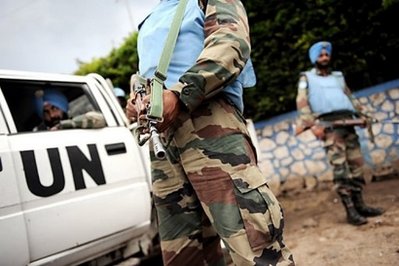
Is the UN in Congo to help? To keep the peace? To serve and protect?
Who are they there to help? Where is the peace? Who are they serving?
Sunday, August 29, 2010
DR Congo killings by Rwandan army may be genocide, UN report says - Telegraph
One step closer?
http://www.telegraph.co.uk/news/worldnews/africaandindianocean/democraticrepublicofcongo/7967880/DR-Congo-killings-by-Rwandan-army-may-be-genocide-UN-report-says.html

Crimes carried out by the Rwandan army and allied rebels in Democratic Republic of Congo could be classified as genocide, a draft UN report has said.

DR Congo killings 'may be genocide' - UN draft report - BBC News
http://www.bbc.co.uk/news/world-africa-11105289
A draft UN report says crimes by the Rwandan army and allied rebels in Democratic Republic of Congo could be classified as genocide.
http://www.telegraph.co.uk/news/worldnews/africaandindianocean/democraticrepublicofcongo/7967880/DR-Congo-killings-by-Rwandan-army-may-be-genocide-UN-report-says.html

Crimes carried out by the Rwandan army and allied rebels in Democratic Republic of Congo could be classified as genocide, a draft UN report has said.

DR Congo killings 'may be genocide' - UN draft report - BBC News
http://www.bbc.co.uk/news/world-africa-11105289
A draft UN report says crimes by the Rwandan army and allied rebels in Democratic Republic of Congo could be classified as genocide.
Subscribe to:
Posts (Atom)